Design and Wellbeing

How Calm Imagery Supports Focus and Wellbeing in Professional Spaces

Why the visual layer affects concentration, recovery, and daily comfort

Many workplaces and public interiors are designed for function first. Comfort is handled through furniture, lighting, and acoustics, while walls are treated as optional. But the visual layer is what people look at every day. Over time, it changes how a space feels and how easy it is to concentrate, rest, or recover.

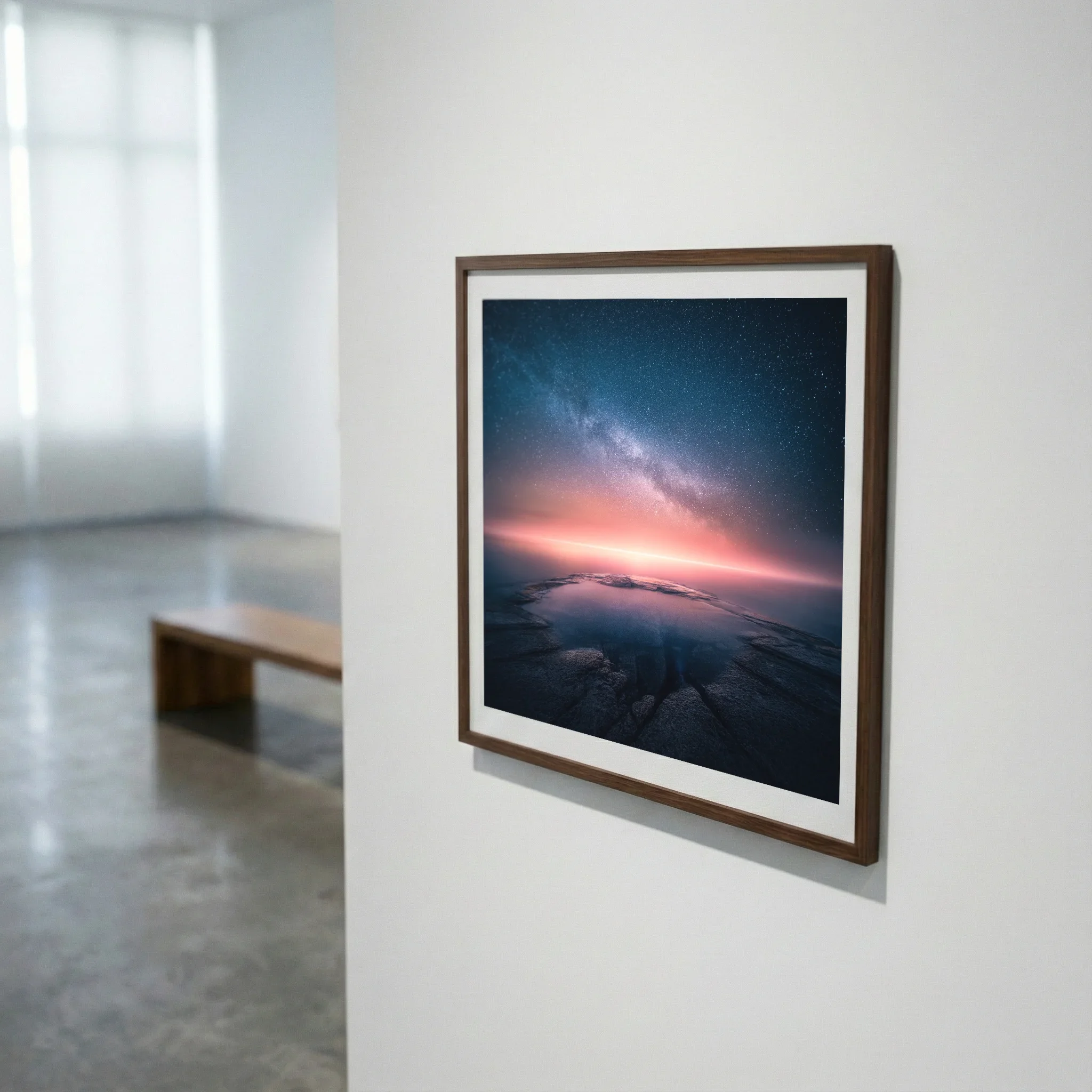
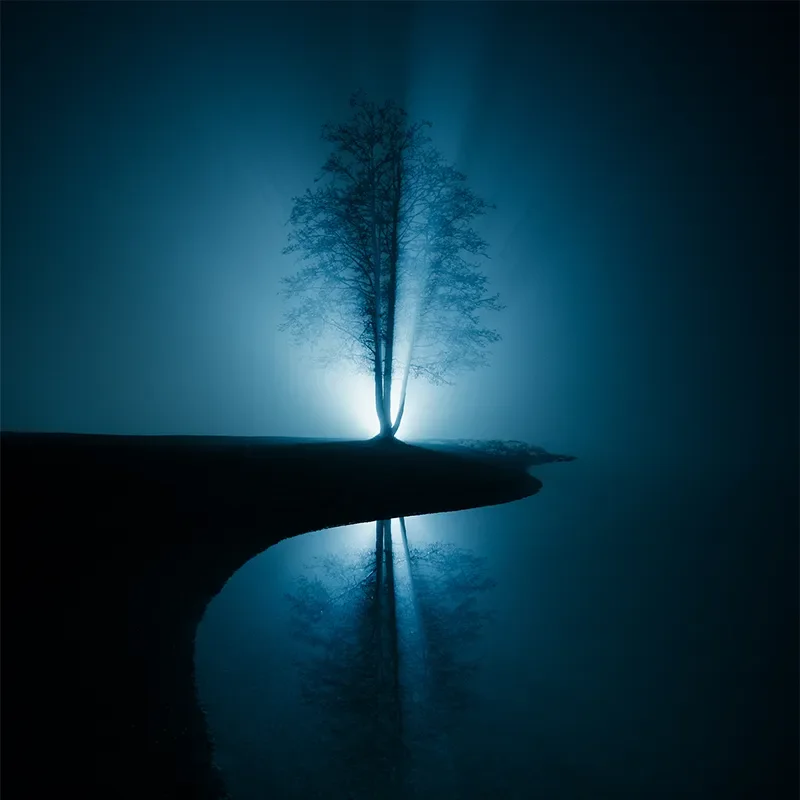
Calm photography integrated into a professional interior environment

Visual load shapes the day

Modern environments keep the eyes busy. Screens, signage, notifications, and movement compete for attention. Even when you do not consciously notice each signal, your brain still processes it. Over a day, this can show up as faster fatigue, lower patience, and constant switching between tasks.

In offices, it often looks like shallow focus and frequent interruptions. In hotels, it can show up as restlessness in areas that should feel quiet. This is why I treat imagery as part of the function of a space, not a finishing touch.

Biophilic design uses light, greenery, and natural materials to make environments easier to be in. Calm imagery can support that same goal because it sits in the field of view for years. Good imagery gives the eyes a place to rest and helps the room feel less demanding.
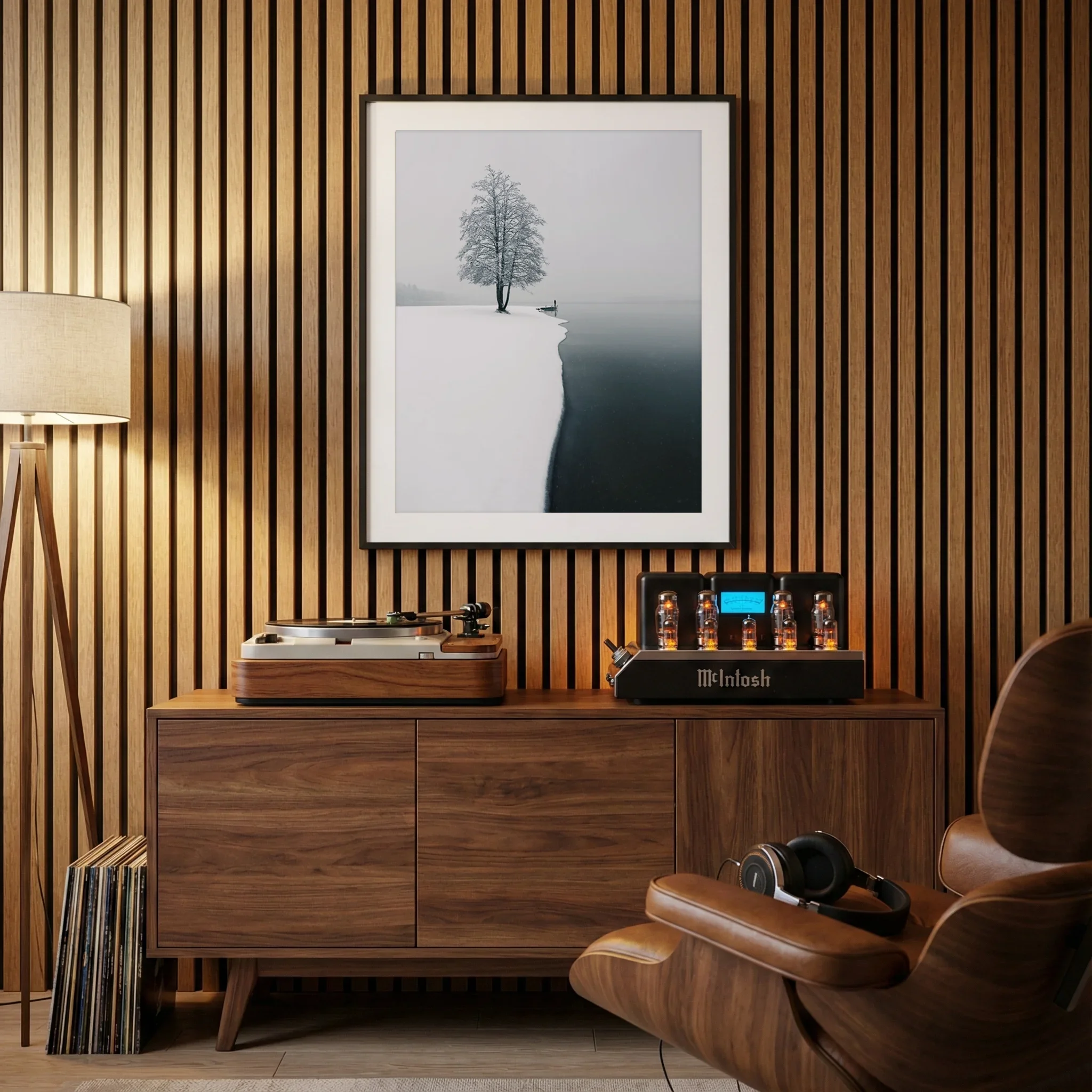
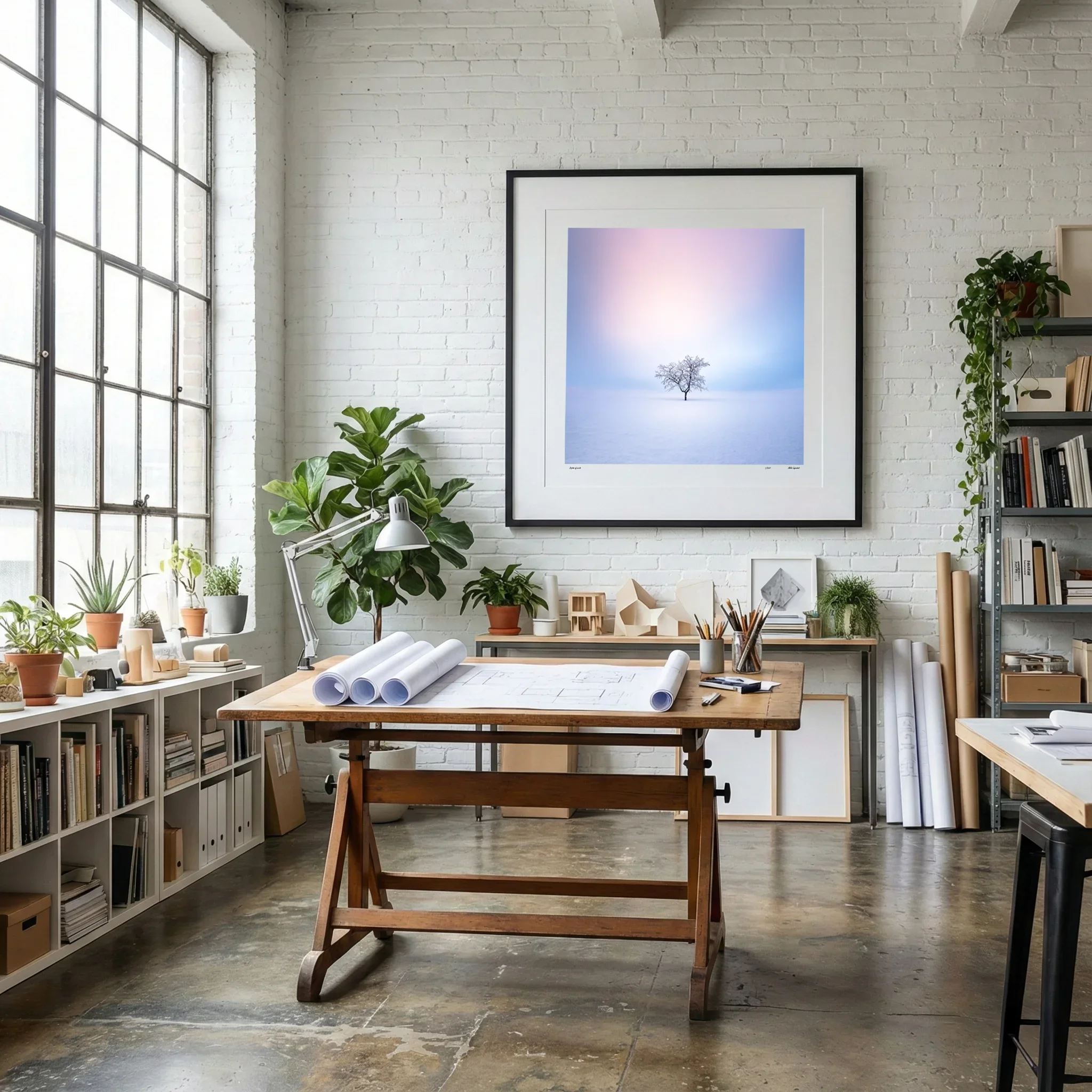
Atmospheric photography integrated into a minimalist workspace

Working on a professional space or brand environment? See the process on the Projects page.

"The best image in a working space is one you can look at for a few seconds and feel your breathing slow down."

What calm looks like in practice

Calm is not empty walls. It is an environment where nothing keeps pulling at you. The eye can move slowly, land on something, and stop without being pushed to react.

In spaces built for focus, the job of an image is to support the atmosphere. That usually means controlled contrast, quiet tones, and compositions that feel stable at a glance. These images age well because they stay comfortable in daily use.

Restraint

Images that sit naturally in the room and do not compete with work, conversation, or rest.

Longevity

Work that still feels right after repeated daily exposure.

Placement

Choices based on viewing distance, surrounding materials, and the pace of the space.

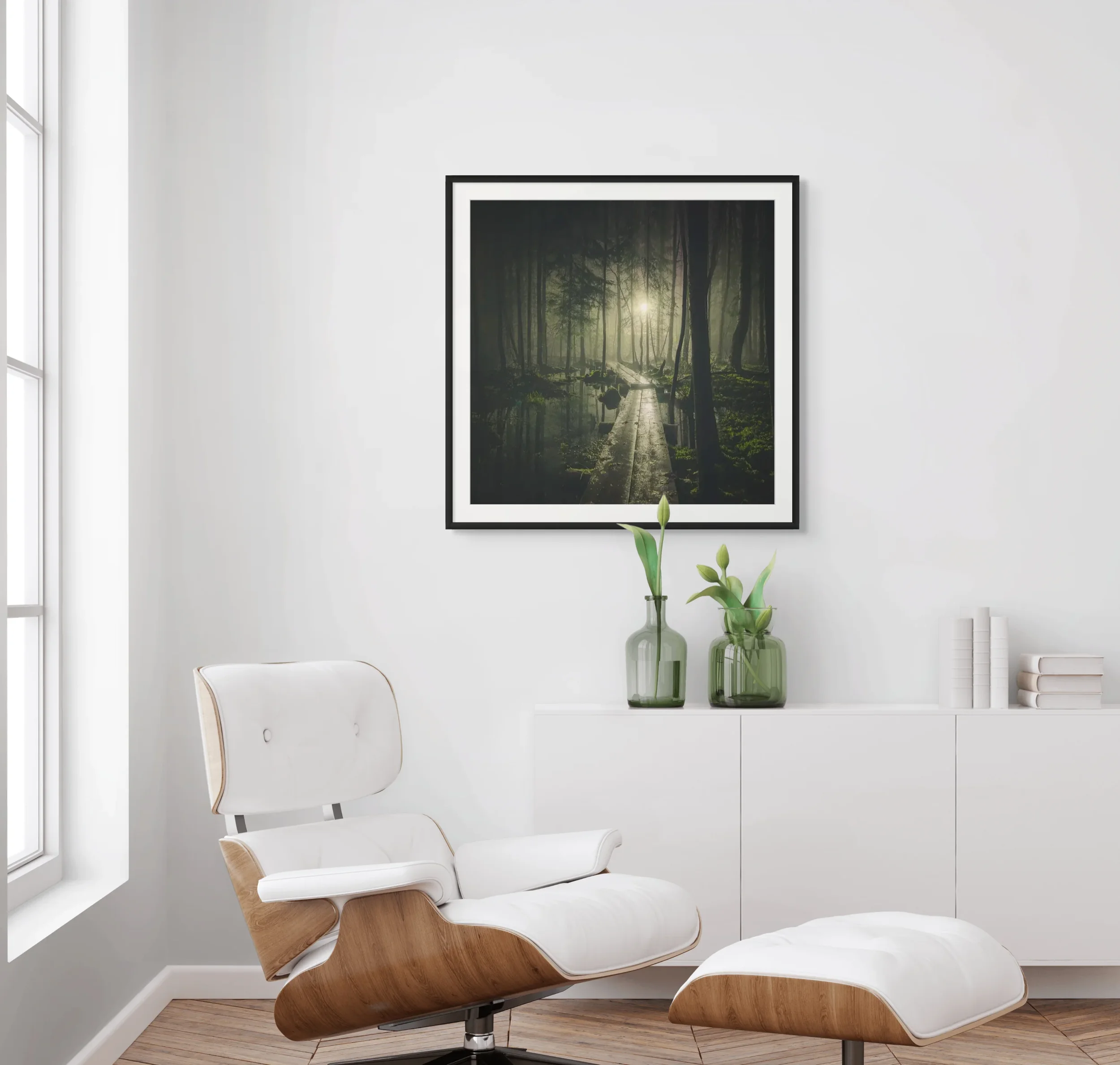
Minimalist Nordic landscape print in a calm interior setting

Balance that lasts

Nordic design is often described as minimal, but the more useful word is balance. When the visual layer is clear and measured, the room becomes easier to inhabit. People concentrate longer. Meetings feel less rushed. Rest areas feel more restorative.

This matters most in places where people return again and again. When imagery is chosen for the actual environment, it starts to feel like part of the architecture. The goal is not to impress on day one, but to feel right on day five hundred.

A curated collection of atmospheric prints on a wall